The new wave of Basque gastronomy in Biarritz hotels
The new wave of Basque gastronomy in Biarritz hotels
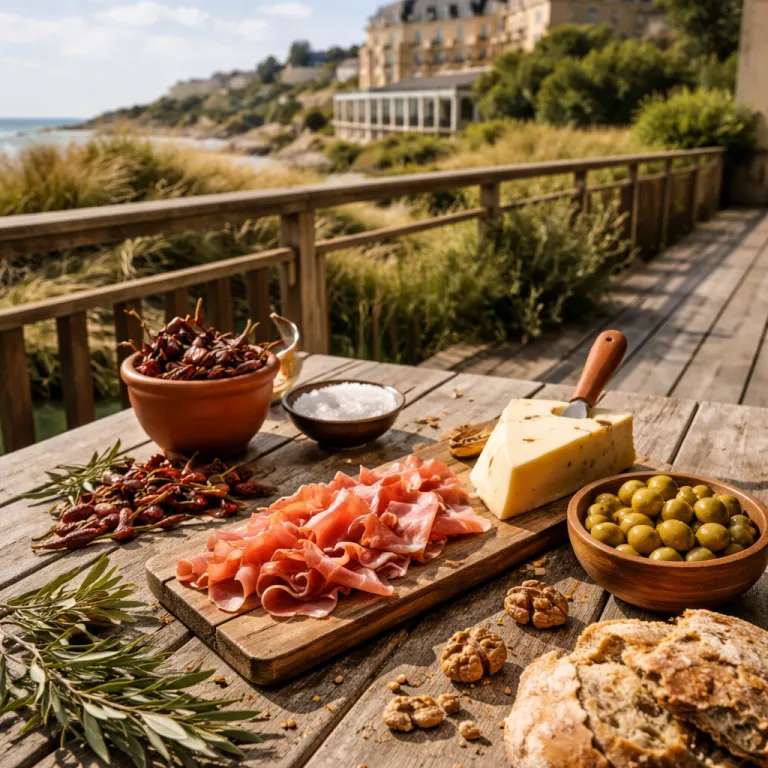
Basque gastronomy in Biarritz is no longer a side note to the surf forecast. It has become the main title on every serious traveler’s agenda, reshaping what a luxury hotel restaurant can be along this stretch of the Basque coast. The result is a dining experience where the Atlantic, the markets and the Pays Basque hills all speak clearly on the plate.
In Biarritz, the incoming generation of chef talent is choosing the Basque Country over the Riviera, and that choice matters for every guest considering reservations. Gregory Marchand’s arrival at the Régina Experimental in 2023, covered in French lifestyle press and hotel trade news, signals that Paris-trained chefs now see Biarritz as a laboratory, not a consolation prize after Saint-Tropez. This shift pulls the center of gravity toward the French Basque shoreline, where local food culture is defined as much by fishermen and cheesemakers as by Michelin inspectors.
The city counts around 190 restaurants excluding fast food, and 91 new openings in just a few recent seasons show how quickly the scene is evolving, according to figures cited by Le Monde’s lifestyle pages on the Basque coast. Within that landscape, luxury hotel dining rooms are no longer content to be safe corporate spaces serving generic cuisine to anonymous business travelers. They are becoming precise expressions of contemporary Basque cuisine, with chefs using piment d’Espelette, line-caught hake and Ossau-Iraty as key points of identity rather than garnish.
Listen to how the leading figures talk about their work and you understand the stakes. “Andrée Rosier, awarded in 2007” is more than a line in a guide; it is a reminder that the first female Meilleur Ouvrier de France chose to root her Michelin-starred career in Biarritz, at Les Rosiers, as profiled by Gault&Millau and regional press. When a chef of that calibre commits to the Pays Basque, it sends a clear signal to other starred restaurants and to the luxury hotel world watching closely.
For the traveler, this means that a hotel stay in Biarritz now doubles as a curated tour of Basque restaurants without leaving the lobby. A German-born chef like Fabian Feldmann at L’Impertinent, known for seafood-focused cuisine, shows how international perspectives can still respect local terroir. A typical menu might move from a crudo of Saint-Jean-de-Luz tuna with piment d’Espelette oil to roasted line-caught hake with Irouléguy wine jus and a dessert built around Ossau-Iraty and black cherry. When your room key also unlocks access to a chef who treats every plate as a detailed description of the coastline, the value of staying in a top hotel becomes very tangible.
The best properties understand that the Basque culinary scene in Biarritz’s chef networks is a strategic asset, not a decorative amenity. They negotiate directly with producers in Saint-Jean-de-Luz for the first sardines of the season, they track which Michelin-starred addresses in San Sebastián are influencing techniques, and they design food tours that start at the market and end at the hotel bar. In this context, Biarritz’s Basque identity is not a marketing slogan but a daily practice visible in every service, from breakfast taloa with local ham to evening plates of grilled chipirons.
Terroir as a competitive advantage for luxury hotel restaurants
Basque Country terroir gives Biarritz hotels an advantage that no amount of marble or spa square meters can replicate. When a chef can reach Saint-Jean-de-Luz in less than a half-hour drive, the morning’s sardines and line-caught tuna become the backbone of the lunch menu. Aurélien Largeau at La Table has shown how a signature ttoro built on those Saint-Jean-de-Luz fish can anchor a tasting menu that feels both local and quietly luxurious, a point often highlighted in regional guides and local food columns.
In the French Basque hinterland, piment d’Espelette holds Protected Designation of Origin status and shapes the aromatic profile of countless dishes. Used well, this chilli is not about heat but about depth, giving sauces and jus a gentle lift that pairs beautifully with Atlantic seafood. When a hotel restaurant takes the time to explain that nuance, perhaps by contrasting a simple grilled turbot seasoned only with salt and piment d’Espelette against a richer ttoro, the guest’s experience shifts from simple food consumption to a guided immersion in Basque cuisine.
Ossau-Iraty cheese, Irouléguy wines and small-batch cider from the Basque Country complete this terroir palette. Luxury properties that treat these products as key points in their culinary narrative, rather than as generic cheese plate fillers, create a sense of place that no imported caviar can match. The smartest chefs in Biarritz now design menus where every description reads like a short guide to the surrounding hills, ports and valleys, often naming specific farms or fishing boats in the menu notes.
This terroir focus also changes how reservations are managed in high season. Guests who once booked a hotel purely for sea views now ask detailed questions about the restaurant’s suppliers and whether a cooking class with the chef is available. When a concierge can answer that the chef works directly with fishermen from Saint-Jean-de-Luz and farmers across the Pays Basque, and that a morning market visit followed by a hands-on workshop is possible, the perceived rewards of staying in house increase dramatically.
For business-leisure travelers extending a stay, this terroir-driven approach offers efficient depth. A well-planned three-night visit can include a structured progression from casual Biarritz market food to a Michelin-starred dinner, then a day trip to San Sebastián for pintxos and a visit to one of Martín Berasategui’s restaurants. Each step reinforces the sense that the Basque coast is a single, coherent culinary landscape, even as you cross the border between country and city.
Hotels that ignore this context risk feeling generic, no matter how polished their service. Those that embrace it can position their restaurant as a hub for food tours, wine tastings and producer visits that start and end under the same roof. In that model, collaborations between Basque chefs in Biarritz and local artisans become a core part of the property’s value proposition, not an optional extra for the marketing brochure.
Michelin recognition, chef personalities and the new hotel playbook
Michelin recognition has always mattered on the Basque coast, but in Biarritz it now shapes hotel strategy in very concrete ways. When Le Clos Basque earns attention for modern French cuisine with regional inflections, it raises the bar for every nearby hotel restaurant. Guests quickly learn that a short walk from their room can lead to a dining room where Basque cooking is interpreted with precision rather than cliché.
Names matter in this ecosystem, and the smartest hoteliers treat each chef as a strategic partner rather than a replaceable employee. Andrée Rosier at Les Rosiers, Fabian Feldmann at L’Impertinent, Yenofa Arangoits at Le Marion and Léa Etchegoyen at Anéma each bring distinct sensibilities to the Biarritz Basque table, as noted in Gault&Millau and Basque Magazine profiles. Their presence proves that the gastronomic scene in Biarritz’s chef community is defined by individual voices, not by a single monolithic style.
For luxury travelers, this means that choosing a hotel is effectively choosing a culinary neighborhood. Stay near the Halles and you are within minutes of Basque restaurants that move effortlessly between pintxos and tasting menus. Opt for a grand oceanfront property and you may trade immediate market access for a more choreographed Michelin-starred experience, where every course is timed to the sunset over the Grande Plage.
The Michelin factor also influences how hotels structure their own dining offers. Some properties accept that they will never compete head-on with starred restaurants and instead position their restaurant as a refined, flexible space for quality food at any hour. Others pursue the guide with clear intent, building teams and menus that can stand alongside the best starred restaurants in the Basque Country and across San Sebastián.
For the guest, the key is to read beyond the star count and focus on alignment with personal priorities. If you value narrative-driven cuisine and long, contemplative dinners, a Michelin-starred table attached to your hotel will feel like a nightly private performance. If your schedule is shaped by meetings and early flights, a restaurant that offers shorter menus built around local fish, piment d’Espelette and seasonal vegetables may serve you better.
One practical tactic for business-leisure travelers is to split their stay between two properties with contrasting culinary identities. A few nights in a palace-style hotel with a formal dining room can be followed by a more intimate address where the chef might host a cooking class or join you for a glass of Irouléguy at the bar. Linking such a Biarritz stay with a Paris segment at a property like the Four Seasons Hotel George V, often highlighted in refined-stays guides, creates a coherent arc where each hotel and each chef plays a distinct role in your overall journey.
Pintxos, fine dining and how to book for the best Basque experience
The tension between pintxos culture and gastronomic formality is where Biarritz’s Basque chefs really show their character. This is not a city where one style will eliminate the other; it is a place where a single evening can move from a standing bar in the Halles to a linen-covered table overlooking the Atlantic. Understanding how to navigate that spectrum is the real luxury for the informed traveler.
Start with the casual end of the scale, because that is where the Basque Country speaks most directly. An hour’s drive from Biarritz takes you to San Sebastián, where the density of pintxo bars and Martín Berasategui’s influence on local kitchens create a masterclass in small-plate precision. Back in Biarritz, a focused walk through the market area exposes you to local food that is humble in format but uncompromising in product quality, from simple tortilla slices to plates of grilled peppers and anchovies.
From there, you can calibrate how much structure you want from your hotel restaurant. Some travelers prefer to treat the hotel as a calm base, using it mainly for breakfast and one carefully planned dinner, while spending the rest of their meals exploring independent Basque addresses. Others see the hotel dining room as the anchor of their trip, booking multi-course menus that showcase Basque cuisine in its most polished form and using pintxos as a casual counterpoint.
Either way, reservations are non-negotiable in peak months, especially for Michelin-starred addresses and high-demand hotel restaurants. A good concierge will not only secure tables but also map out a sequence that balances heavy and light meals, urban and coastal settings, formal and relaxed service. Think of this as building your own guide to the Basque coast, where each lunch and dinner is a chapter rather than an isolated event.
How to book your Basque hotel-restaurant stay
– Reserve your Biarritz hotel and in-house restaurant at least four to six weeks ahead for July–September.
– Ask the concierge which Basque chefs and producers the property works with, and request one market visit or cooking class.
– Plan one night for a Michelin-starred experience, one for pintxos in Biarritz or San Sebastián, and one flexible evening for spontaneous finds.
– Confirm opening days for key Basque restaurants, as many close early in the week or for seasonal breaks.
For executives extending a work trip, the smartest move is to align meeting schedules with meal strategy. A working lunch in a quieter hotel restaurant, where Wi-Fi and privacy are guaranteed, can be followed by an evening of food tours through the Halles and the port. On your final night, a tasting menu built around Saint-Jean-de-Luz fish, piment d’Espelette and Ossau-Iraty offers a concentrated summary of everything the Pays Basque does well.
In the end, the real rewards of Biarritz’s culinary scene lie in how seamlessly it can integrate into a luxury stay. When your room key opens onto a lobby that smells faintly of grilled chipirons, when the chef’s description of a dish doubles as a geography lesson in the Basque Country, and when your last espresso is poured by someone who can recommend both a surf break and a San Sebastián lunch spot, you understand what this city now offers. Basque gastronomy in Biarritz hotel restaurants has become the quiet, confident reason to choose this stretch of the Basque coast over any other.
Key figures shaping Biarritz’s gastronomic hotel scene
- Biarritz counts approximately 190 restaurants excluding fast food, a density that gives luxury hotel guests an unusually broad choice of nearby dining options compared with other French Atlantic cities (data reported by Le Monde lifestyle section on Biarritz and the Basque coast).
- Between 2021 and 2025, an estimated 91 new restaurants opened in Biarritz, indicating a rapid expansion of the local food scene that directly benefits hotels seeking partnerships with innovative chefs (same Le Monde dataset and follow-up coverage).
- Andrée Rosier became the first female Meilleur Ouvrier de France in cuisine in 2007, and her decision to base her Michelin-starred restaurant Les Rosiers in Biarritz significantly raised the city’s profile among serious gastronomes (Gault&Millau and regional press profiles).
- Piment d’Espelette has held Protected Designation of Origin status since 2000, anchoring the identity of Basque cuisine and giving hotel chefs a legally defined terroir product to showcase on menus.
- The drive from Biarritz to San Sebastián typically takes around one hour, making cross-border food tours and visits to Martín Berasategui’s restaurants a realistic day trip for guests staying in high-end Biarritz hotels.
- The number of chef-led concepts within Biarritz hotels has increased in parallel with the city’s overall restaurant growth, reflecting a broader trend in which luxury properties compete through culinary identity as much as through room product (a pattern noted in Le Monde, Gault&Millau and Basque Magazine coverage of the region).
Selected sources for further reading: Le Monde (lifestyle, Basque coast dining features); Gault&Millau France (chef profiles and restaurant reviews); Basque Magazine (regional gastronomy coverage and hotel-restaurant dossiers).